Lisbon Tour Map: Baixa to Alfama on Foot
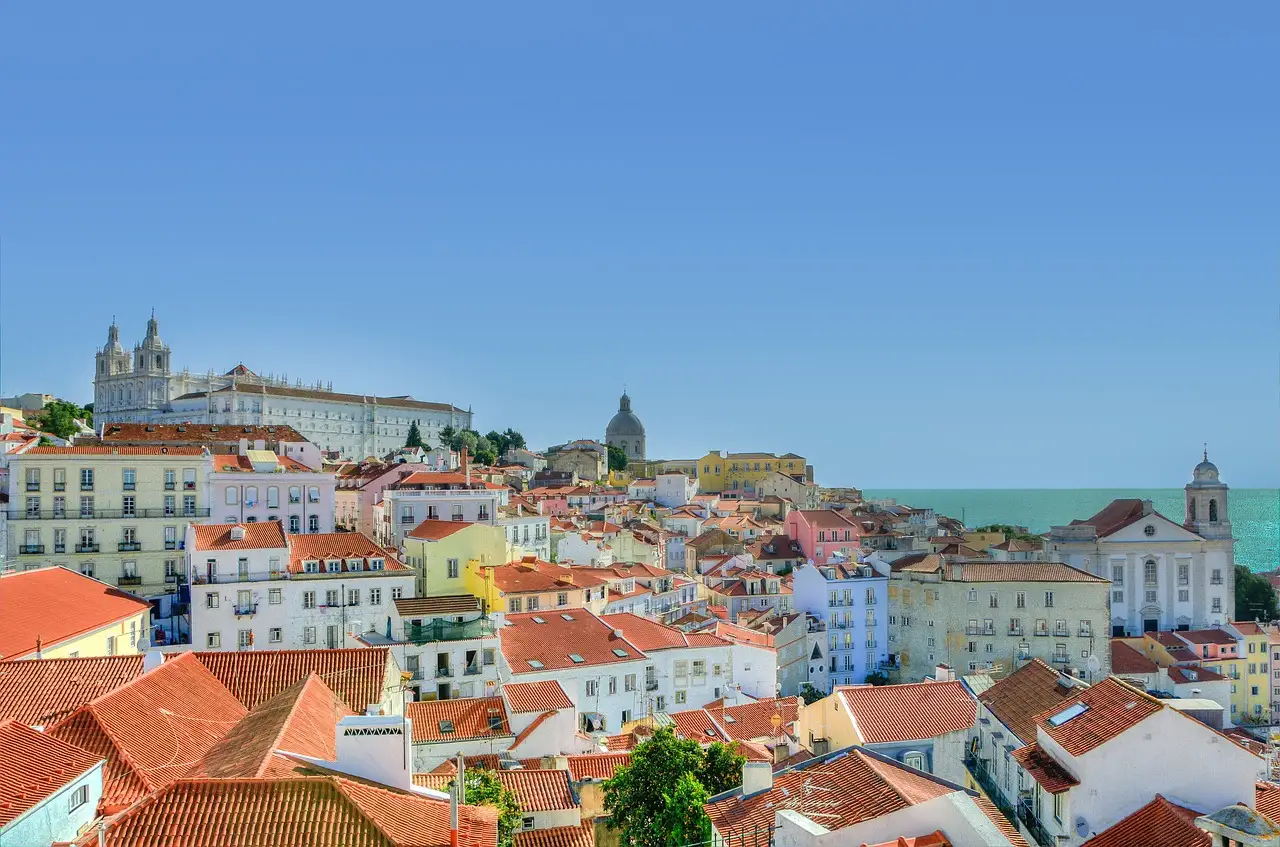
Planning a day on foot in Lisbon, you want a route more than a drawing. A Lisbon tour map that works starts at Rossio, drops through Baixa to the river, then climbs to the cathedral, two Alfama viewpoints and the castle. The climb is the hard part, and there are ways around it.
Planning a day on foot, you need a route you can follow without stopping to read. This guide gives you five steps, from Rossio to the castle. It uses what Turismo de Lisboa, the cathedral and the castle say on their own pages. Where those pages give no distance or walking time, the guide says so instead of guessing.
Prices, opening hours and transport details below come from official pages read on 21 October 2026.
Step 1: Pick up your Lisbon tour map at Rossio
Start at Rossio, also called Praça Dom Pedro IV. The tourist office Ask Me Lisboa Rossio stands on the square. It is open Tuesday to Saturday, 09:00 to 13:00 and 14:00 to 18:00, and closed on Sunday and Monday. Its page lists maps and guides among its services.
Turismo de Lisboa's publications page shows four brochures, and none of them is a city map. So do not count on a printed map. Ask at the desk what they hand out that day. Your phone's map app can steer you, and the stops below give you the order. The Lisboa Card shop page offers a guide to download, and it does not say whether the guide has a map. We found no official walking map, so the diagram and stop list in this guide are the map.
You reach the start by Metro. Rossio station is on the Green line, on Praça da Figueira. Restauradores is on the Blue line. Baixa-Chiado joins the Blue and Green lines at Largo do Chiado. At the river end, Terreiro do Paço is on the Blue line. The route ends at the castle, and Step 4 says how to get home from there.
Step 2: Walk Rua Augusta to the river
Rua Augusta is the straight way from Rossio to the water. Turismo de Lisboa says the street connects Praça do Comércio to Rossio Square and has been closed to traffic since the late 1980s. Street artists, craftsmen and vendors work along it.
At the river end the street passes under a triumphal arch. You can climb it for a 360-degree view of Baixa and the river. The Rua Augusta Arch page lists it open daily from 10:00 to 19:00, with the last entry at 18:30. It gives no price, so check at the entrance, and confirm that it is open on the day.
Then you reach Praça do Comércio. The tourist board calls it one of the largest squares in Europe. Locals say Terreiro do Paço, after the royal palace that stood here until the 1755 earthquake. A statue of King José I on horseback stands in the middle.
Key Takeaway The route costs nothing to walk, and the only tickets are the €7 cathedral, the €17 castle and the arch climb.
Step 3: Climb from Baixa to the cathedral
Now the street starts to rise. Head uphill to Lisbon Cathedral, the Sé. The Sé dates to 1147, says Turismo de Lisboa, with Roman ruins that came before it. Carris lists the stops of tram line 12E in this order: Rua da Conceição, Santa Maria Madalena church, then Sé. So the tram rails are a guide.
The cathedral's ticket page lists €7 for adults and €5 with a Lisboa Card. The ticket covers the climb to the high choir, the balcony between the bell towers and the Treasury museum. The cathedral's schedule shows it closed on Sundays and holy days. It gives two different sets of weekday hours, so confirm on the day.
Alfama is easy to find on any map and hard to cross on foot.
Step 4: Follow the Lisbon tour map to the Alfama viewpoints
Alfama is the oldest and most traditional neighbourhood in Lisbon, according to Turismo de Lisboa. Turismo de Lisboa speaks of cobbled lanes and alleys and warns of steep, gruelling inclines. It adds that the streets have to be discovered on foot.
The first stop is the Miradouro de Santa Luzia, on Largo das Portas do Sol e de Santa Luzia. It has a garden, a pond and decorative tiles. Panels by António Quaresma show Praça do Comércio before the earthquake and the taking of the castle from the Moors. From the terrace you see the towers of São Miguel, the domes of Santa Engrácia and Santo Estevão, and the Tagus. A café and a kiosk sit beside it, and trams pass and ring their bells.
Portas do Sol comes next, with outdoor cafés and a higher viewpoint nearby. The castle is the last climb. The castle's ticket page lists €17 for adults, and adults with a Lisboa Card go in free. Its schedule says daily 9:00 to 21:00 until 31 October, with the last entry at 20:30. From 1 November it is 9:00 to 18:00, with the last entry at 17:30. It is closed on 1 January, 1 May, and 24, 25 and 31 December.
The castle's how-to-arrive page rates the walk from Rossio station at about 11 minutes, from Martim Moniz station at about 12 and from Baixa-Chiado at about 15. Bus 737 runs from Praça da Figueira to the Castelo stop at Chão da Feira, about two minutes from the entrance. Tram 28E stops at the Santa Luzia viewpoint and at Largo Portas do Sol, each about five minutes away. Two lifts help you up from Baixa. The Castelo Lift starts at Rua dos Fanqueiros 176 and exits on Rua da Madalena, and the lift at the Chão do Loureiro car park starts at Largo do Caldas and exits on Costa do Castelo.
What each stop asks of you, as the official pages state it:
| Stop | Ticket | What the page says |
|---|---|---|
| Rua Augusta and Praça do Comércio | None mentioned | Closed to traffic since the late 1980s |
| Rua Augusta Arch | Admission, price not shown | Open 10:00 to 19:00, last entry 18:30 |
| Sé (cathedral) | €7, or €5 with a Lisboa Card | Closed on Sundays and holy days |
| Miradouro de Santa Luzia | None mentioned | Café and kiosk beside the terrace |
| Castle | €17, free with an adult Lisboa Card | Open to 21:00 until 31 October, then to 18:00 |
Pro Tip Look at the Tagus from Santa Luzia first. Then decide whether the €17 castle ticket is worth it for a higher view.
Step 5: Decide how to handle the hills
You can walk the whole route yourself. The climb is the catch. Three things shorten it.
The first is tram 12E. Carris lists its stops from Praça Luís de Camões as Rua da Conceição, Sé, Miradouro Sta. Luzia and Largo Portas Sol, in that order. A single tram trip bought on board costs €3.30. On the 12E page the winter weekday timetable shows departures about 35 minutes apart, so check it before you rely on it. In the list that starts at Martim Moniz, the same line runs Largo Portas Sol, Miradouro Sta. Luzia, Limoeiro, Sé and Rua da Conceição, so it also carries you back down to Baixa.
The second is a guide. Things to Do in Lisbon's count of GetYourGuide listings in October 2026 found 7 walking and bike tours of Lisbon with at least 100 reviews. They cost from €15 to €39 per person, and the middle price is €25.
The Best of Lisbon walking tour through Rossio, Chiado and Alfama costs from €22. It meets at the statue of D. Pedro IV on Praça Dom Pedro IV, where this route begins. Reviewers rate it 4.9 from 3,403 reviews. It lasts three hours, runs in English, and the page lists a pastry, a snack and a wine tasting. Attraction entry fees are not included.
The history, stories and lifestyle walking tour costs from €25. It scores 4.8 from 12,192 reviews. It includes a tram trip, coffee and cake with a live guide. The page lists Bairro Alto, the São Pedro de Alcântara viewpoint and Alfama. It has five possible meeting points, depending on the option you choose, and private and small-group options.
The third is a bike. The electric bike tour through the hills, Alfama and Mouraria costs from €21. Its rating is 4.8 from 3,881 reviews. The page lists the bike, a helmet and a guide, and it runs three hours in English or Dutch. It meets at Spinach Tours Lisboa, Largo do Terreiro do Trigo 16, in Alfama. A private group is available. The highlights include the Pantheon and the castle area. All three tours can be cancelled for free up to 24 hours before.
For more routes and guides, see our guided tours in Lisbon.
Chiado and Bairro Alto: add them at the end
The route leaves out Chiado and Bairro Alto on purpose. They sit on the opposite hill, and adding them to the same walk makes the day much longer. Do them second. Tram 12E links all four areas, so one ride joins them to the route. In the list that starts at Martim Moniz, Carris's stops run Largo Portas Sol, Miradouro Sta. Luzia, Sé, Rua da Conceição, Chiado and Praça Luís de Camões, which Carris marks as Bairro Alto.
If you would rather give them a separate morning, Baixa-Chiado station puts you at Largo do Chiado. The station page lists tram 28E and the Bica lift among its connections. Carris lists the Santa Justa Lift as temporarily closed, so do not plan a ride there.
When a map is the better choice
If you want to set your own pace and can climb, the free route beats every tour above. A guide is worth the money for the stories behind the buildings. A map gives you names and order, not history. Steps are the other catch. The castle's curtain walls are reached by steps, and Turismo de Lisboa warns of steep inclines in Alfama. If that matters to you, ask before you book.
| Step | What to do | What to watch for |
|---|---|---|
| 1 | Start at Rossio and ask the tourist office for a map | Closed Sunday and Monday, and no city map in the brochure list |
| 2 | Walk Rua Augusta to Praça do Comércio | The arch climb has an admission and lists a last entry at 18:30 |
| 3 | Climb to the Sé | The ticket is €7, and the page shows two sets of weekday hours |
| 4 | Visit Santa Luzia, Portas do Sol and the castle | The castle costs €17 and closes at 18:00 from 1 November |
| 5 | Ride tram 12E up, or join a guided walk or e-bike tour, and add Chiado and Bairro Alto last | A single tram trip is €3.30, winter departures are about 35 minutes apart, and the Santa Justa Lift is closed |
Choose a guided walk or e-bike tour for the Alfama hills
Three picks, each with free cancellation up to 24 hours before. The Rossio, Chiado and Alfama walk costs from €22 (three hours, meeting at Praça Dom Pedro IV), the history walk with a tram ride from €25 (three hours, five possible meeting points), and the electric bike tour of the hills from €21 (three hours, meeting in Alfama). Prices and ratings as shown on GetYourGuide on 19 October 2026.
-
Best of Lisbon walking tour: Rossio, Chiado and Alfama
from €22 per person
The same ground as this route, led by a guide, starting at the Rossio square where the walk begins.
3 hours 4.9 (3,406 reviews) Free cancellation
Run by Inside Lisbon tours
Check availability: Best of Lisbon walking tour: Rossio, Chiado and Alfama on GetYourGuide -
History, stories and lifestyle walking tour with a tram ride
from €25 per person
A guided walk that includes a tram trip, so the steepest part of the climb is shorter.
3 hours 4.8 (12,204 reviews) Free cancellation
Run by LISBOA AUTÊNTICA LDA
Check availability: History, stories and lifestyle walking tour with a tram ride on GetYourGuide -
Hills, Alfama and Mouraria tour by electric bike
from €21 per person
An electric bike does the climbing for you, with stops at the Pantheon and the castle area.
3 hours 4.8 (3,886 reviews) Free cancellation
Run by Boost Portugal · not suitable for pregnant women, people over 118 kg, people under 150 cm
Check availability: Hills, Alfama and Mouraria tour by electric bike on GetYourGuide
Prices and ratings as shown on GetYourGuide on 21 October 2026.
Lisbon walking tours and electric bike toursFAQ
Where can you find a downloadable or printable Lisbon tour map?
Which Metro stations are near the route?
In what order should you see Alfama, Baixa, Chiado and Bairro Alto?
How do you get back down from the castle?
Where should a Lisbon walking route start?
How long does a self-guided Baixa to Alfama walk take?
How much does the Baixa to Alfama walk cost?
Is Alfama hard to walk?
Can you skip the climb to Alfama?
Is a guided walk worth it for this route?
Conclusion
Walk the route in order and it costs you nothing except the tickets you choose. Start at Rossio, take Rua Augusta to the river, then climb to the cathedral, Santa Luzia, Portas do Sol and the castle. If the hills worry you, ride tram 12E up or join a guided walk or electric bike tour, and keep the map for the next day.
Sources
- Turismo de Lisboa, Alfama (2026), last checked 21 October 2026
- Turismo de Lisboa, Miradouro de Santa Luzia (2026), last checked 21 October 2026
- Turismo de Lisboa, Rua Augusta (2026), last checked 21 October 2026
- Turismo de Lisboa, Arco da Rua Augusta (2026), last checked 21 October 2026
- Turismo de Lisboa, Praça do Comércio (Terreiro do Paço) (2026), last checked 21 October 2026
- Turismo de Lisboa, Ask Me Lisboa Rossio (2026), last checked 21 October 2026
- Turismo de Lisboa, Publications (2026), last checked 21 October 2026
- Sé de Lisboa, Tickets (2026), last checked 21 October 2026
- Sé de Lisboa, Opening hours (2026), last checked 21 October 2026
- Castelo de São Jorge, Choose your ticket (2026), last checked 21 October 2026
- Castelo de São Jorge, Schedules (2026), last checked 21 October 2026
- Metro de Lisboa, Rossio station (2026), last checked 21 October 2026
- Metro de Lisboa, Restauradores station (2026), last checked 21 October 2026
- Metro de Lisboa, Baixa-Chiado station (2026), last checked 21 October 2026
- Metro de Lisboa, Terreiro do Paço station (2026), last checked 21 October 2026
- Metro de Lisboa, Martim Moniz station (2026), last checked 21 October 2026
- Castelo de São Jorge, How to arrive (2026), last checked 21 October 2026
- Turismo de Lisboa, Lisboa Card shop page (2026), last checked 21 October 2026
- Carris, Lift: Santa Justa Lift, temporarily closed (2026), last checked 21 October 2026
- Carris, Line 12E Martim Moniz - Praça Luís de Camões (2026), last checked 21 October 2026
- Carris, Occasional journeys: prices of single trips and 24-hour tickets (2026), last checked 21 October 2026